The Office Lunch Decision Tree

Nora EllisChicago, United States
Office-worker weight-loss coach and former group fitness instructor
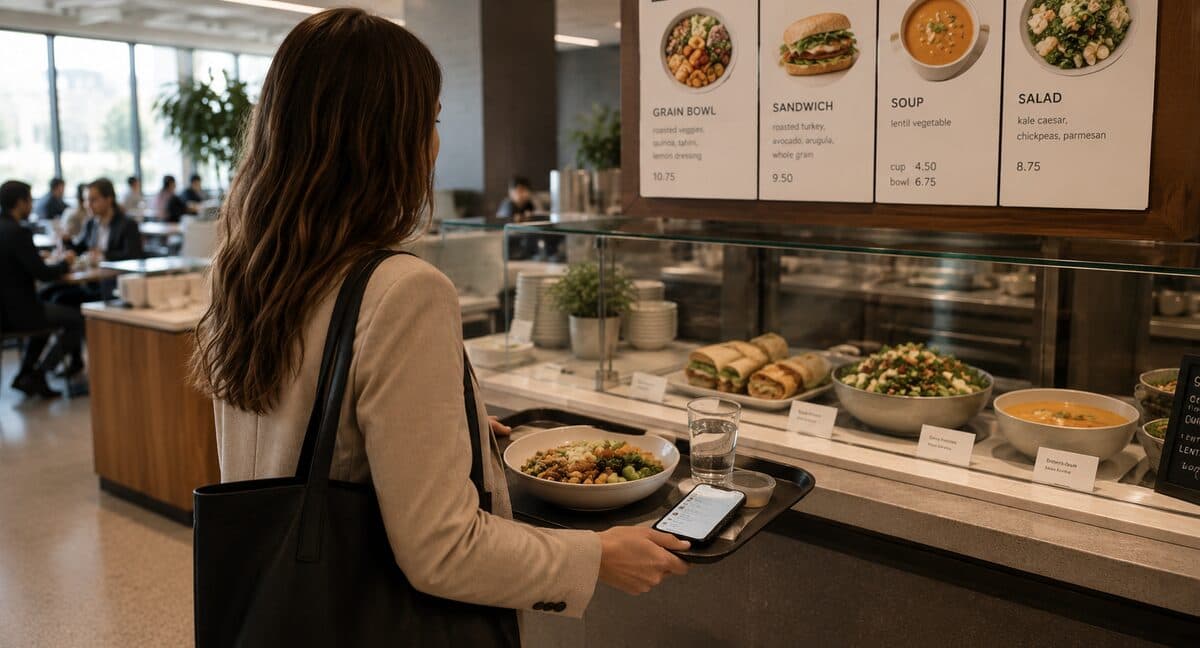
The message arrived at 1:12pm with a photo of a cafeteria menu.
Underneath it, someone had typed:
I already messed up today. What is the least bad option?
I could tell she was standing in line because the photo was tilted and there were two trays visible behind the menu. Her team had ordered lunch after a meeting ran long. The meal she packed was still in the office refrigerator. Breakfast had been “good,” which meant lunch now felt like a test she was about to fail in public.
That is the question I get most, even when nobody says it directly.
It sounds like “What should I eat?”
What it usually means is “Did I already ruin the day?”
I do not coach people who live inside perfect fitness routines. I coach people with desk jobs, client dinners, delayed trains, birthday cake in the break room, and calendars that do not care what the meal plan said on Sunday.
The goal is not to make the week flawless.
The goal is to give people defaults sturdy enough to survive Thursday.
I looked at the menu in the photo. There was a grain bowl, two sandwiches, a soup, and a salad that would have left most adults hungry again before the afternoon meeting.
I wrote back:
Get the bowl. Pick a protein, keep the rice, add vegetables, put the sauce on the side if you want control over it. Then eat dinner later. Lunch does not get to cancel dinner.
She replied with one word:
Okay.
That exchange became the office lunch decision tree I teach now.
It has three branches:
- At a bowl place: choose protein, one carb, two vegetables, and sauce on the side.
- At a sandwich shop: keep the sandwich, add protein if needed, and skip the side only if you are not actually hungry for it.
- At a client lunch: choose the meal you can repeat without turning the table into a math problem.
The framework sounds almost too plain, which is why it works.
People do not need a perfect lunch. They need a decision they can make before hunger and panic start negotiating against each other.
The content around that framework has different jobs.
The quick lunch guide is for the person already standing in line. The grocery list is for the person trying to make the next five workdays less chaotic. The travel checklist is for the airport breakfast situation. The office-week reset plan is different. That one is for people who want the full system: lunch defaults, a simple training schedule, two grocery versions, and a Friday review that does not turn into punishment.
StarLovin helps me separate quick help from real follow-up.
The lunch guide, grocery list, and travel checklist can go out through DM as soon as someone asks. They are immediate tools. Their usefulness drops if they sit behind my coaching schedule.
The full office-week reset plan uses email capture.
The DM asks for an email before sending the plan. If the reply does not look like an email address, the flow asks the person to try again. Once the email is collected, StarLovin sends the guide and saves the contact.
The order matters:
Ask. Collect. Send. Save.
It keeps the larger plan from becoming one more Instagram link someone cannot find on Thursday, and it gives me a clean contact record for the people who asked for the whole system instead of one lunch answer.
A few weeks after I set it up, someone requested the office-week plan while sitting on a delayed train. She mistyped her email the first time. The flow caught it, asked again, and delivered the guide before she reached home.
The message before the email field says:
Drop your email and I will send the office-week reset plan. It includes lunch defaults, a simple training schedule, and a Friday review. It is general coaching content, not medical advice.
That final sentence matters.
Weight-loss content can get ugly fast when it promises too much. My plan is a framework for busy weeks, not a prescription and not a guarantee. A clean conversion path should not require exaggerated certainty.
The person from the train wrote back the following week.
She did not say she had lost weight. She did not send a perfect meal-prep photo.
She said:
We had a client lunch Thursday and I did not restart on Friday.
That is the outcome I want the system to support.
Quick question, quick guide.
Full plan, email first.
Collected email, saved contact.
Then, ideally, one less person treating a sandwich as evidence that they cannot be trusted around food.
The win is not a perfect Monday.
The win is reaching Thursday afternoon, after the meeting ran late and lunch changed, and realizing the week is still yours.
Seven P.M. Is Prime Time. It Is Also Shift Change.
Next articleI Set Up Three DM Flows After Work and Still Made Dinner
Keep Reading

The Hard Part Was Never Making the Earrings. It Was Catching People Before the Drop Closed.
Keep reading
The Dark Corner Did Not Need More Decor. It Needed a Second Light Source.
Keep reading