The Preset Was Fine. The Light Was Green.

Avery StoneSeattle, United States
Wedding and portrait photographer and natural-light editing educator
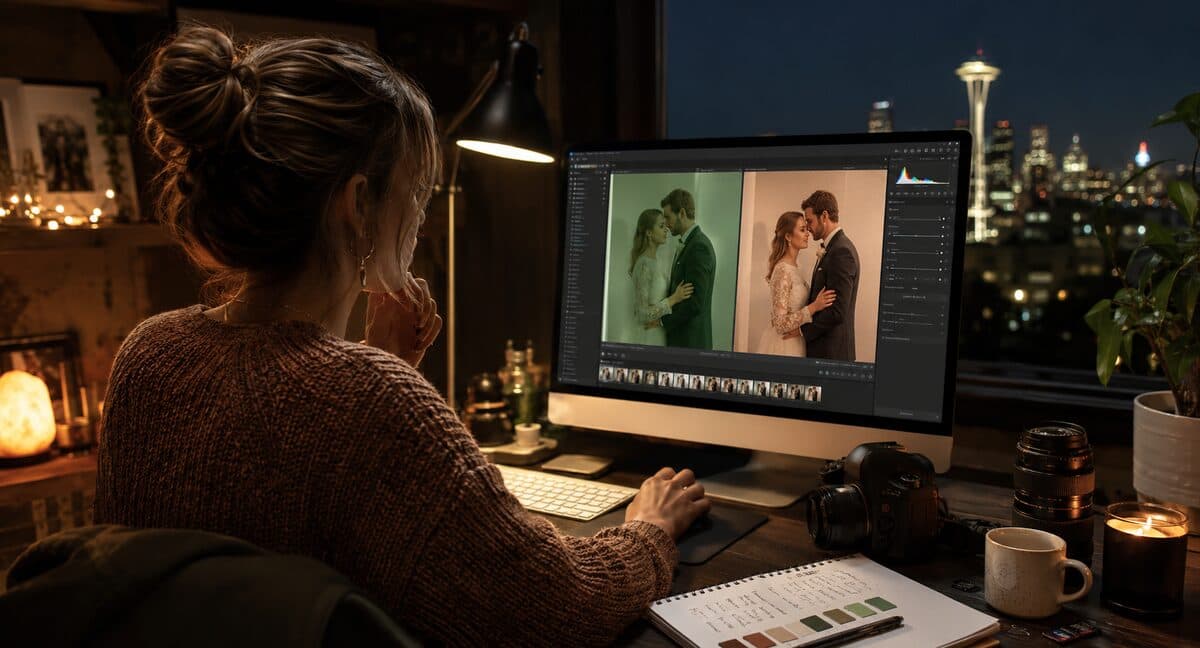
The message came in at 11:18pm, which is when photographers are either backing up cards, regretting their posture, or pretending they will only edit "one more frame."
"I bought the warm portrait preset. Why does my photo still look green?"
She was not angry. That almost made it worse. Angry customers are easy to sort into the emotional drawer labeled refund risk. This one sounded embarrassed, like she had followed the directions and still failed the class. She sent the file. I opened it and immediately saw the problem: hotel ballroom light bouncing off beige walls, a dress in shadow, skin catching green from a plant wall that probably looked expensive in person and criminal in camera.
The preset had done what it was supposed to do. The photo had been asked to become something it was never set up to become.
That is the part of editing I wish more new photographers heard before they buy anything from me. Presets are not fairy dust. They are a repeatable starting point after the real decisions have already happened: where the subject stood, what the light was doing, whether the whites were actually white, whether the background was reflecting color into skin. A good preset can make a clean choice faster. It cannot go back in time and move the bride two feet closer to the window.
I refunded her anyway.
Not because the pack was broken, but because I could tell she had bought the wrong kind of help. What she needed first was not my warm portrait preset. She needed the short breakdown I had buried three posts earlier: how to spot bad indoor light before you shoot, and what to do if you cannot move the person. I sent her that video, wrote two notes over the screenshot, and then sat there annoyed at myself for making the lesson harder to find than the product.
That small customer service moment changed how I think about my account.
The polished before-and-after still gets attention. Of course it does. A gray ceremony frame turning into a soft, clean portrait is satisfying in the way all visual transformation is satisfying. But the useful part is not the reveal. It is the ten seconds before the edit, when I show the ugly original and admit what was wrong with it. Too much green spill. Backlight too strong. Face turned away from the cleanest light. Whites clipped because the dress was doing what white dresses love to do.
Those are the videos that make people better, and weirdly, they are also the videos that sell the right presets to the right people.
So I stopped treating every preset question like a generic store request.
When I post a backlit portrait lesson, the next step should be the warm portrait pack or the guide that explains how I expose for skin. When I post a reception flash breakdown, the next step should be the low-light pack, not my whole storefront. When I show a courthouse gallery with clean whites, the link should match that lesson. I set those paths in StarLovin before the post goes out so the person asking from that specific video gets the specific next step.
Click tracking matters here, but not in the internet-marketer way.
I am not staring at numbers trying to squeeze drama out of a caption. I want to know which teaching moments lead to confident buyers. Sometimes the dramatic before-and-after gets the comments, but the quiet video about white balance gets the better clicks. Sometimes a post I almost did not publish brings in the exact people who understand what the pack is for. That helps me make better lessons and fewer vague sales posts.
It also lets the caption stay honest.
Instead of cramming a storefront pitch under every image, I can talk about the thing the image actually teaches. Where the window was. Why I kept the greens cooler. What I would fix in camera next time. If someone wants the pack, the path is there. If they only needed the lesson, they can leave with the lesson.
I still get preset questions late at night. Some are easy. Some are really lighting questions wearing a product question costume. The difference is that I am less tempted to answer all of them with a link now.
The next time I filmed a preset Reel, I did not start with the finished portrait. I started with the ugly file, the green wall, and the two-second pause where every beginner realizes the edit was never going to be the whole story.
The Guitar Went Back In The Corner
Next articleSeven P.M. Is Prime Time. It Is Also Shift Change.
Keep Reading

The Hard Part Was Never Making the Earrings. It Was Catching People Before the Drop Closed.
Keep reading
The Dark Corner Did Not Need More Decor. It Needed a Second Light Source.
Keep reading