The Dress Was Twelve Dollars. The Fit Was The Whole Trick.

Tessa BrooksMinneapolis, United States
Thrift stylist and alteration hobbyist
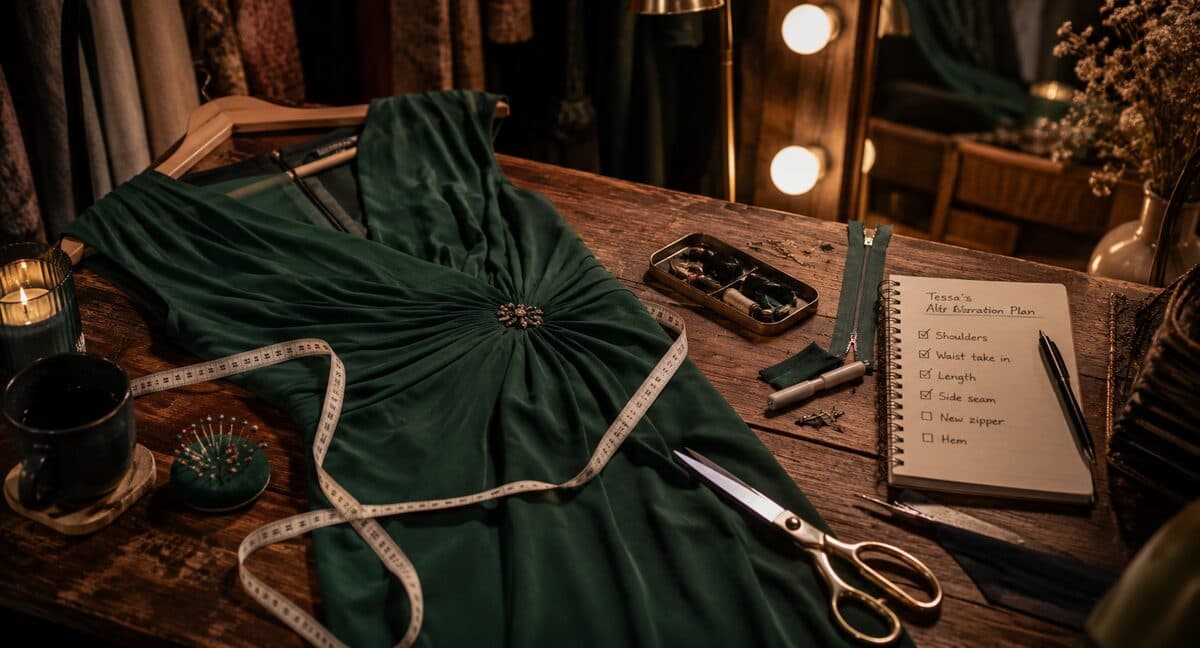
The price tag said 12 dollars. The zipper repair would cost about 18 dollars. The hem needed four inches removed, and the waist needed one inch taken in on each side.
That was the real price of the dress.
I filmed the first check in the fitting room. The fluorescent light was rude but useful. It showed the pulling at the zipper, the extra fabric under the arm, and the place where the hem cut across the widest part of my calf.
My first test is the shoulder because the shoulder is expensive. A loose waist can often be adjusted. A long hem is ordinary work. A shoulder seam sitting an inch down the arm usually means I am negotiating with the whole garment. On this dress, the seam landed correctly.
Second test: fabric. I pinched the side seam and let it fall. The material recovered without holding a crease, the lining was intact, and the faded patch near the zipper disappeared when the dress moved. Good enough to alter.
Third test: the math. Twelve for the dress, eighteen for the zipper, thread I already owned, and about forty minutes at my machine. I was willing to spend that. If it had needed a new lining, shoulder work, and a zipper, it would have gone back on the rack.
The Reel showed those decisions in order. I left the bad fit on screen long enough for viewers to see it, pinned the waist, folded the sleeve, marked the hem, and then showed the finished dress with shoes I already wear to work.
There was no exact dress link to send. Thrift content rarely works that way. The useful next step was my fit checklist: shoulder, fabric, repair cost, and whether the item fills an actual gap in the closet.
I connected that checklist and the small alteration-tool list to the post in StarLovin. Click tracking gave me a better read than the compliments did. The finished outfit received the loudest comments, but the fit checklist drew more clicks than the sewing-kit link. A later video about blazer sleeve length looked plain on the feed and sent even more people to the checklist.
That result changed my next three posts. I filmed shoulder seams, coat lining, and the difference between a hem worth fixing and a hem hiding a larger proportion problem. The products stayed limited to the tools that support those decisions: hem tape, a basic sewing kit, and the belt shape used in the video.
Two weeks later, someone sent me a fitting-room photo of a green dress. The waist was close. The fabric was beautiful. The shoulder seam sat halfway down her arm.
Her message said, "Repair math says no. I left it."
The receipt underneath the photo showed 0 dollars.
The 3:15 Ward Was More Important Than The Kill
Next articleSaturday At The Open House Starts Before The Door Unlocks
Keep Reading

The Hard Part Was Never Making the Earrings. It Was Catching People Before the Drop Closed.
Keep reading
The Dark Corner Did Not Need More Decor. It Needed a Second Light Source.
Keep reading