Your First $19 Digital Product Is Not Going to Change Your Life

Julian CarterSan Francisco, United States
Micro creator monetization consultant and SaaS partnerships lead
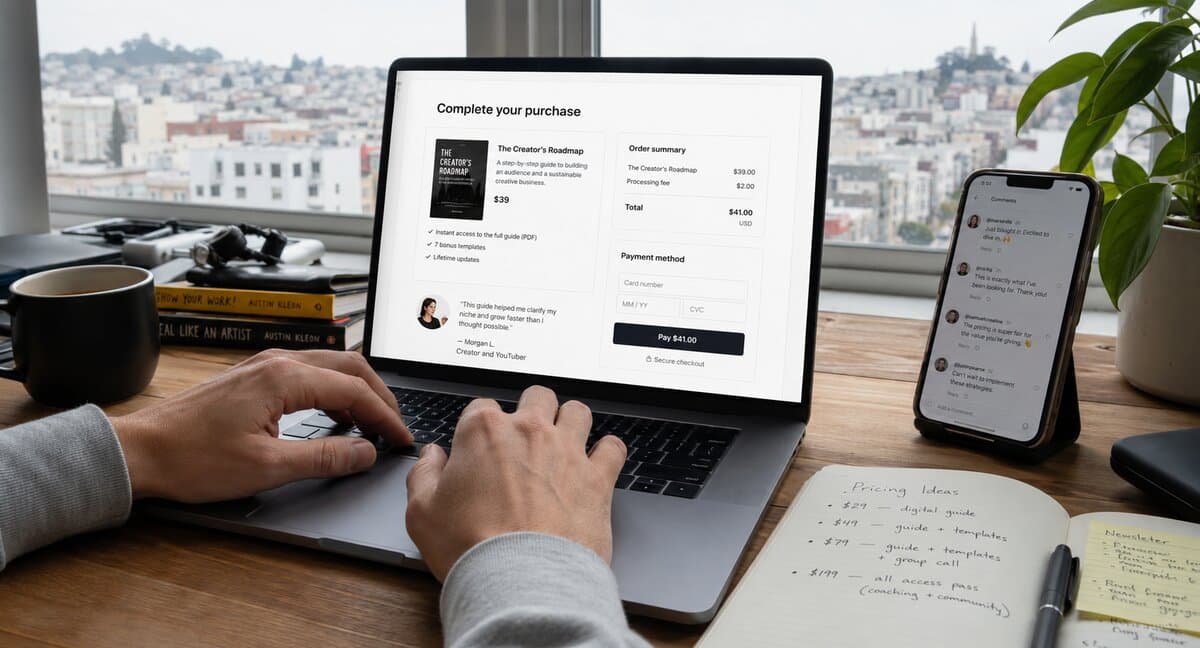
Your first paid product should be a little embarrassing.
I do not mean bad or sloppy. I mean smaller than the business fantasy you had in your head.
A $19 preset pack. A two-page rate card. A one-hour meal plan. A tiny Notion template that solves one annoying problem. Something specific enough that a stranger can look at it and know whether they want it in under ten seconds.
That is where most micro creators should start.
Instead, they get told to build a funnel. A product ladder. A launch sequence. A full ecosystem. Very serious architecture for a person with 2,300 followers and no proof anyone will buy the first brick.
I say this with affection because I work with these people. Photographers, designers, coaches, template sellers. Smart, talented, slightly allergic to selling. They do not usually need a bigger strategy first. They need one clean handoff between the moment someone says "I want this" and the moment they can get it.
The leak is always smaller than people think.
Someone posts a Reel showing a Lightroom preset. It does well — not viral, but the right kind of well. The comments section tells a story that most creators misread.
There is a particular rhythm to the comments on a product-adjacent Reel. First come the compliments: beautiful tones, love this, what camera. Easy to respond to, zero revenue attached. Then come the intent signals. Someone asks a specific usability question — will this work on photos taken with a phone, not a camera. Someone else skips the compliment entirely and goes straight to pricing. A third person does not even form a full sentence, just drops the name of the preset and a question mark. These are not engagement metrics. These are people standing at the counter with their wallets half open, squinting at a menu that is not there.
And then the creator replies: "link in bio."
I understand why. It feels normal. Every creator says it. But look at what just happened. A person saw something they wanted, expressed clear purchase intent in the most direct way a comment field allows, and in return they got a treasure hunt. Leave the Reel. Tap the profile. Open the link page. Guess which of the seven buttons matches the thing they just asked about. Maybe they get distracted by a different button. Maybe they bounce. The decision they had already made — I want this, show me where to pay — got turned into a second decision they now have to make: which link is the right one, and do I care enough to find it.
That is the crack in the floor. The person had already decided. The creator made them decide again.
I started giving clients the same advice: make one thing, name the path, remove the extra clicks.
For myself, I keep a few simple downloads ready. RATE for a rate card. PITCH for outreach scripts. PRODUCT for a first-offer planner. MAP for turning repeated audience questions into something sellable.
When someone asks for one, StarLovin sends it. That is the only magic trick. The rate card and scripts go straight out. The planner asks for an email because people usually need follow-up examples after they open it.
I do not treat that email like a trophy. I treat it like permission to send the next useful note.
I know the bigger tools. I work in tech. ManyChat is real software, and for actual campaign teams it makes sense.
But most micro creators I talk to are not campaign teams. They are deciding whether a monthly tool should exist in the same budget as Canva, web hosting, and lunch.
That is why predictable pricing matters. StarLovin staying simple and capped is not a cute detail. It is the difference between "I can test this for a month" and "I need to understand a pricing page before I have sold anything."
And no, automation does not solve pricing fear.
I get the DMs that start with a pricing question and turn into a positioning conversation halfway through. Should brand photography and social media management have separate rates, or is bundling leaving money on the table. If someone's entire audience is other creators, does that change what kind of product makes sense. Whether a template should be sold or used as a lead magnet. These are not keyword questions because the answer depends on the creator's audience, offer, confidence, and actual capacity. A template can start that conversation. It cannot finish it.
The goal of the first $19 product is not passive income.
The goal is evidence.
Will people pay? Which questions show up before they pay? Which part of the offer is unclear? Which comment keeps repeating until you finally admit it should be a download?
Build from that.
Do not start from a funnel diagram someone sold you before you had anything moving through it.
I Tracked Every DM for 30 Days. The Problem Was Not Response Time.
Next articleA Morning Chart Has One Job: Get Everyone to Shoes
Keep Reading

The Hard Part Was Never Making the Earrings. It Was Catching People Before the Drop Closed.
Keep reading
The Dark Corner Did Not Need More Decor. It Needed a Second Light Source.
Keep reading